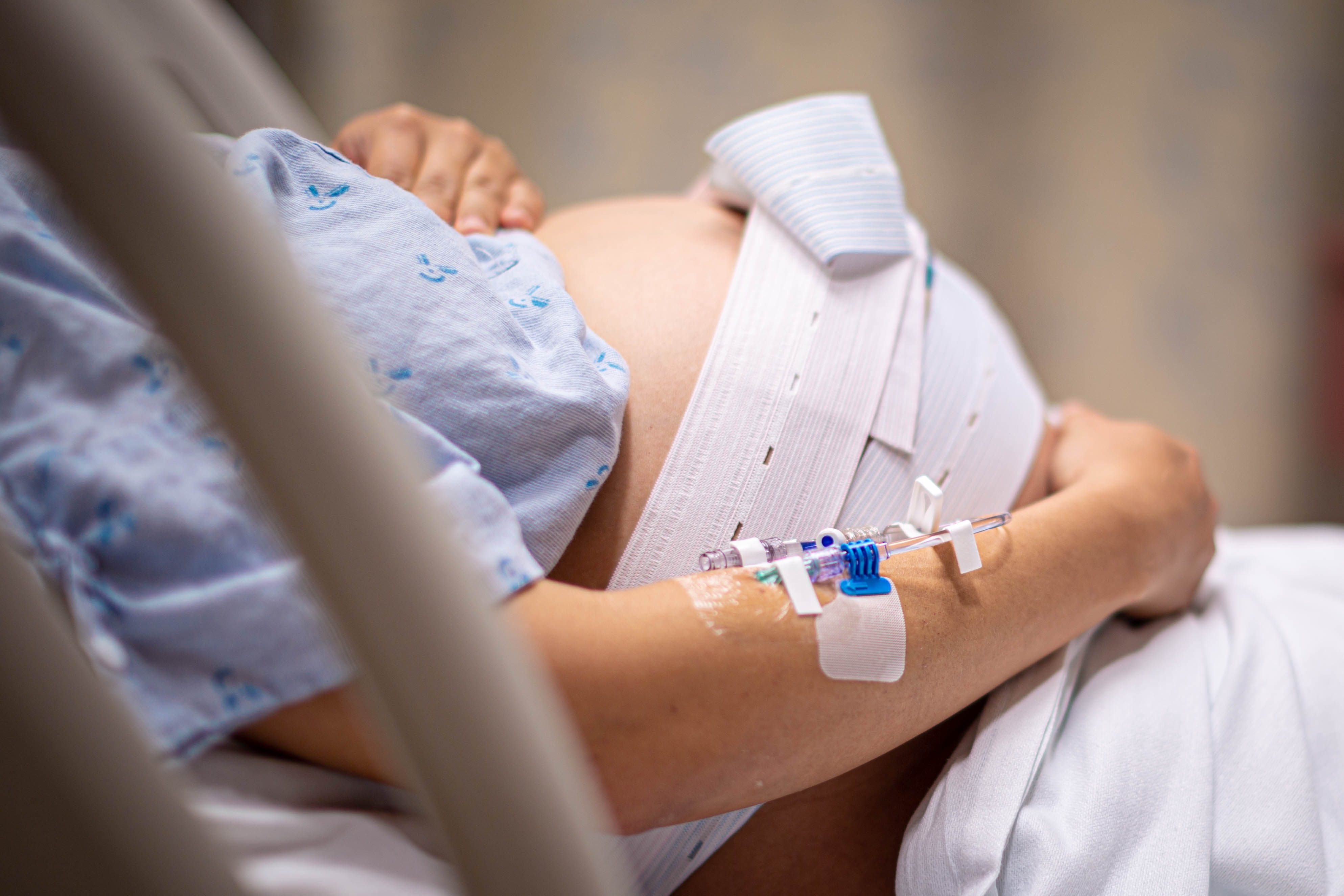
Shutterstock image
By TESS VRBIN | Arkansas Advocate
Rural Arkansans face increasingly long drives to hospitals that deliver babies as more labor and delivery units have closed due to financial strain, according to new data from the Arkansas Center for Health Improvement.
ACHI, a nonpartisan health research and advocacy center, found that 29% of pregnant Arkansans traveled more than 30 minutes and 8% traveled more than an hour to give birth in 2024. The longer it takes to get to a delivering hospital, the higher the risk of health problems for mothers and newborns, according to a 2022 study from the American College of Obstetricians and Gynecologists.
The median drive time from Arkansans’ homes to delivering hospitals remained at 16 minutes between 2022 and 2024, but residents of some counties saw spikes of 10 minutes or more.
Those include Ashley and Jackson counties, where hospitals closed their labor and delivery units in 2023. Ashley County saw the largest spike in residents’ median drive time to a delivering hospital, from 16 minutes in 2022 to 48 minutes in 2024. Jackson County’s median drive time increased from 20 to 35 minutes in the same two-year period.
A total of eight labor and delivery units have closed throughout Arkansas since 2020, leaving 31 delivering hospitals in 22 of Arkansas’ 75 counties.
Bradley County also lost its maternity ward in 2023, though its median drive time remained the same at 24 minutes between 2022 and 2024, according to ACHI.

Increasing distances between Arkansans and delivering hospitals are part of the state’s overarching struggles meeting maternal health needs. Arkansas consistently has among the nation’s highest maternal and infant mortality rates, per ACHI data.
The University of Arkansas for Medical Sciences announced last year that it would use a $4 million federal grant to launch a multi-pronged expansion of obstetric services this year in south Arkansas, including in Ashley County.
But without Ashley County’s labor and delivery unit, some Chicot County residents’ nearest option to give birth is in Greenville, Mississippi, which is up to 40 miles away from parts of Chicot County.
The Chicot Memorial Medical Center in Lake Village is able to “handle an emergency delivery, or at least get them moved on with an ambulance to another location,” County Judge Tom Mosley said.
“It’d be great if the state would offer some type of help for the rural areas, especially the low-income areas in the south, like we are,” Mosley said. “We seem to be kind of forgotten sometimes.”
Mosley is not alone in this sentiment. Rural areas often lack the population base for hospital revenue to meet or exceed the cost of services. For example, Cleveland County has no hospital for its fewer than 8,000 people, and it lost access to labor and delivery services in neighboring Ashley and Bradley counties.
“I wish we had the population to pull a good hospital in down here, but we don’t,” Cleveland County Judge Don Triplett said.
Last year, southwest Arkansas healthcare administrators and law enforcement officers told lawmakers they need more money to meet their communities’ needs. Low insurance reimbursement rates have forced hospitals throughout Arkansas to cut a variety of services to stay open.
Southwest Arkansas lost Magnolia’s labor and delivery unit in 2021 and Camden’s earlier this year. When the Camden unit was still open, Ouachita County residents drove a median of 24 minutes for labor and delivery.
The region now has only four delivering hospitals: two in Hot Springs, one in Arkadelphia and one in Mena. Some residents cross the state line into Texarkana for delivery, but out-of-state hospitals do not accept Arkansas Medicaid.
The shortage of labor and delivery services isn’t unique to south Arkansas. Searcy County remained the county with the state’s highest median drive time in 2024, rising from 73 to 84 minutes in two years, according to ACHI. The nearest labor and delivery units are in Harrison, Mountain Home and Conway, all at least an hour away from much of Searcy County.
The county has a large population of older adults, so the need for labor and delivery services is low, but the county’s lack of a hospital or emergency room means residents need to be aware of when they’ll need healthcare, Searcy County Judge Tony Horton said.
“People out here are used to [the distance], so they don’t pay attention to it,” Horton said. “They just make sure they get there on time.”
Discover more from
Subscribe to get the latest posts sent to your email.