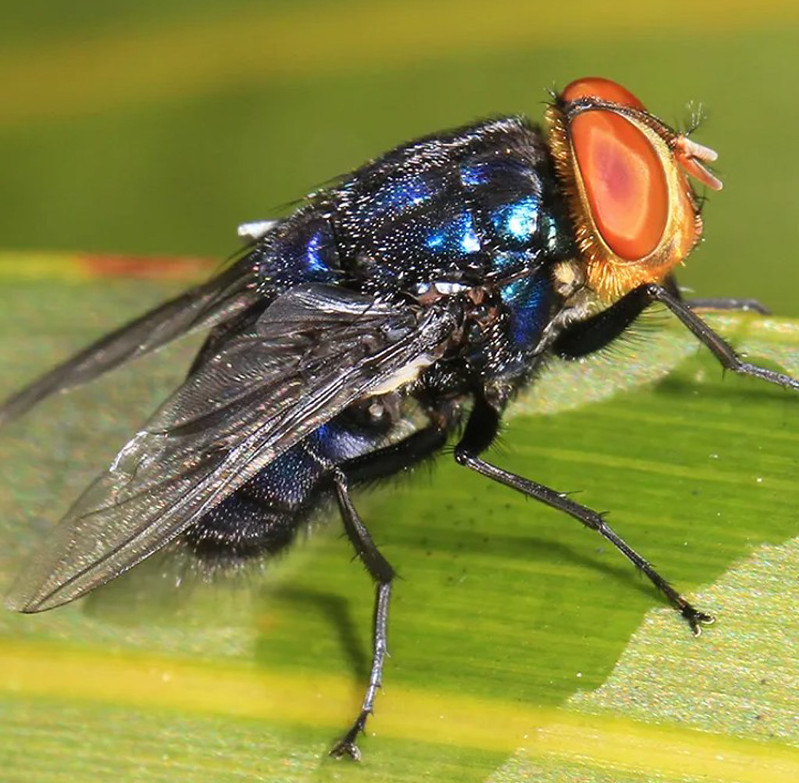
DETECTED — The U.S. Department of Agriculture announced Wednesday that the presence of a New World Screwworm was confirmed in a calf in Zavala County, Texas, about 15 miles from the U.S.-Mexico border. | Photo courtesy Judy Gallagher
Fast Facts:
- New World Screwworm is considered threat to all livestock, wildlife, humans
- Infestation can be prevented, treated
- Not a food safety issue
- Check out extension’s online resource page
- Arkansas State Veterinarian issues new guidance for livestock producers
By RYAN McGEENEY | University of Arkansas Division of Agriculture
LITTLE ROCK — The U.S. Department of Agriculture announced Wednesday that the presence of a New World Screwworm was confirmed in a calf in Zavala County, Texas, about 15 miles from the U.S.-Mexico border.
The area is about 450 miles southwest of Texarkana, Arkansas. A 20-kilometer containment area has been established around the detection, halting the movement of livestock in and out of the area.
While confirmation of the insect — a serious parasite of cattle and warm-blooded animals — in south Texas does not present a threat to the food supply, Arkansas ranchers are being advised to keep a close eye on their herds.
Although the insect is largely discussed as a problem for cattle producers, Kirsten Midkiff, extension animal welfare specialist for the University of Arkansas Division of Agriculture, said it can affect “any warm-blooded mammal,” including humans.
According to the USDA’s Animal and Plant Health Inspection Service, the worm is “a serious pest that affects livestock, pets, wildlife, and less commonly, people and birds.”
“It’s a danger to all livestock,” Midkiff said. “We hear a lot about it in cattle because historically there was significant cases in cattle and economic losses, but it can affect wildlife, pets, and humans. There have been several cases in pets, in fact there were a lot of cases seen in Mexico in dogs. We’ve seen it in deer and other animals.”
Kelly Loftin, professor and extension entomologist for the Division of Agriculture, said the last notable incursion of NWS in the United States was in 2016-2017 in a population of Key deer in the Florida Keys.
“Production livestock were not involved,” Loftin said. “NWS was eradicated by the spring of 2017 through vigilant surveillance, sterile male releases and preventative animal treatment.”
The USDA recently updated its page dedicated to identifying and stopping the spread of screwworm.
Transmission
Midkiff said infestations spread between animals through the New World Screwworm fly, which lays egg packets in open wounds or orifices, including mucus membranes. The screwworm gets its name, in part, from barbs on its mouth parts, which allow it to burrow deep into a host organism.
“It can be an umbilical site, a dehorning site, a scrape from barbed wire, even a tick bite,” she said. “The eggs can also be laid around the mucus membrane as well — around external genitalia or the anus.
“They lay the egg packet, and then the larvae emerge a few hours later. They’ll begin burrowing into the wound causing extensive damage. Seven days later, they’ll fall out and pupate on the ground for another seven days, then reemerge as flies.
“It’s not something that can move from animal to animal via larvae,” Midkiff said. “The flies have to be present.”
Midkiff emphasized that while this is an animal welfare issue, it is not a food safety issue.
“In terms of consumer products and food safety, it’s not a concern,” she said. “It’s on the live animal side.”
Under the Federal Meat Inspection Act, inspectors with USDA’s Food Safety and Inspection Service are required to inspect animals before slaughter to ensure they’re fit for human consumption. FSIS inspectors also examine carcasses after slaughter to check for any issues that might require condemnation.
Prevention and treatment
The USDA and allied agencies have worked for decades to prevent the spread of the worm to the United States from Mexico, largely succeeding in repelling the spread since the 1950s using a “sterile insect technique.” Using radiation, populations of male flies are sterilized, then released on the ground or from airplanes over areas where the screwworm is thought to exist. The eggs eventually laid in or on host organisms never produce larvae, thus curtailing the infestation cycle.
In Arkansas and other livestock-producing states, Midkiff said surveillance is key for farmers at this moment.
“The big thing is going to be paying attention,” Midkiff said. “Keep an eye on wounds, signs and symptoms.”
Symptoms of a screwworm infestation include a foul odor in an animal, especially if there is an open wound where larvae may be present.
“We’re looking for signs that an animal is uncomfortable or acting different than normal,” Midkiff said. “They’re going to be lethargic, not feeling well. They may seem depressed — they may go off feed and isolate themselves. If the infestation is around the head area, there may be some head shaking — like a dog with ear mites. They may be off by themselves, laying down, ears droopy.”
Midkiff said that if an animal is infected with screwworm, it does not necessarily need to be euthanized. The U.S. Food and Drug Administration has recently issued several emergency use authorizations specifically for the prevention and treatment of screwworm in livestock, pets and other host species.
“Whether euthanasia is necessary will depend on the severity of the case,” Midkiff said. “But infestation can be treated. Clean the wound, get all the larvae out. Secondary bacterial infections may be common, so antibiotics may also be necessary.”
Screwworm can affect humans. The U.S. Centers for Disease Control noted that as of June 2, there were more than 2,000 human cases in Central America and Mexico and cautions those who travel to those areas. However, the CDC said the risk to people in the U.S. is not immediate.
On June 6, the Arkansas State Veterinarian issued new guidance for livestock handling in Arkansas. According to the release, all animals entering Arkansas from the affected area in Texas will be restricted and a state entry permit will be required for those animals.
“Additionally, all warm-blooded animals from Texas must be accompanied by an Interstate Certificate of Veterinary Inspection (iCVI) dated within seven days of entry into Arkansas,” according to the release.
For more up-to-date information on the New World Screwworm, visit the Division of Agriculture’s dedicated information page.
If you believe a livestock or domesticated animal on your property is showing signs of a screwworm infestation, contact the Arkansas Department of Agriculture Animal Health Division. If you believe a wildlife animal is infested, contact Arkansas Game and Fish at agfc.health@agfc.ar.gov or 833-345-0325. If you believe you or another person in your family may have an infestation, contact the Arkansas Department of Health.
To learn about extension programs in Arkansas, contact your local Cooperative Extension Service agent or visit uaex.uada.edu. Follow us on Facebook and Instagram. To learn more about the Division of Agriculture, visit uada.edu. To learn more about ag and food research in Arkansas, visit the Arkansas Agricultural Experiment Station at aaes.uada.edu.
Discover more from
Subscribe to get the latest posts sent to your email.