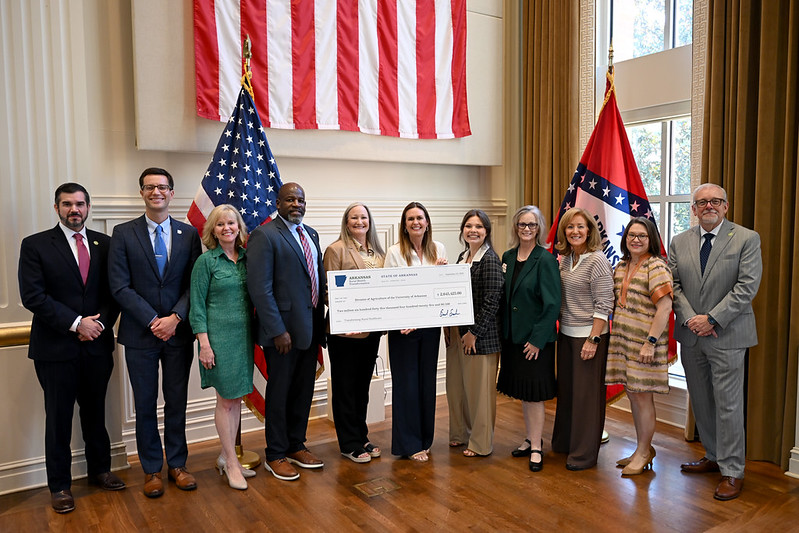
GRANT ANNOUNCEMENT — From left: Rural Health Transformation Project Director Brad Nye; Department of Finance and Administration Secretary Jim Hudson; Arkansas Surgeon General Kay Chandler; Deacue Fields, head of the University of Arkansas Division of Agriculture; Jessica Vincent, UADA assistant professor of health; Gov. Sarah Huckabee Sanders; Heather Wingo, extension immunization educator; Nina Roofe, head of UADA Family and Consumer Sciences; Arkansas Secretary of Health Renee Mallory. Not visible: Arkansas Department of Human Services Secretary Janet Mann and Arkansas State Crime Laboratory Director Dr. Ted Brown. Taken Sept. 24, 2026, at the Governor’s Mansion. | Photo by Will Newton
By MARY HIGHTOWER | University of Arkansas Division of Agriculture
Fast Facts
- Grant is part of federal Rural Health Transformation Program
- Governor announced $54.6M in Rural Health Transformation Program grants
- Roofe: Grant will bring ‘lasting, meaningful change to rural Arkansas.’
Ensuring Arkansans have lasting knowledge and resources to achieve healthier lives in their home communities is the aim of ROOT of Rural Health, a program that received a $2.65 million grant from the federal Rural Health Transformation Program.
The Cooperative Extension Service, the outreach arm of the University of Arkansas Division of Agriculture, received the grant Sept. 24 during a ceremony at the Arkansas Governor’s Mansion. Gov. Sarah Huckabee Sanders announced $54.6 million in awards as part of a second round of grants from the Rural Health Transformation Program. Arkansas has received $208 million from the program this year.
“These awards represent scalable, homegrown strategies that will improve nutrition, increase physical activity, and reduce chronic disease in our community,” said Renee Mallory, the state secretary of health. “And while prevention is always the goal, we also want to make sure our health care systems are there for us when we need them and are optimized to support prevention.”
In the extension program, ROOT of Rural Health, ROOT is an acronym for Rural Outreach, Opportunity, and Transformation. The program casts a wide net, looking at childhood wellness, chronic diseases and health literacy. The project expects to reach 30,000-50,000 rural residents annually, engage more than 300 partners, and deliver over 2,000 health-promotion activities.
Key strengths of the program are extension’s network of agents — who are present in all 75 counties — and subject matter specialists based at extension’s state headquarters in Little Rock, plus the organization’s 100-plus years of working in rural communities.
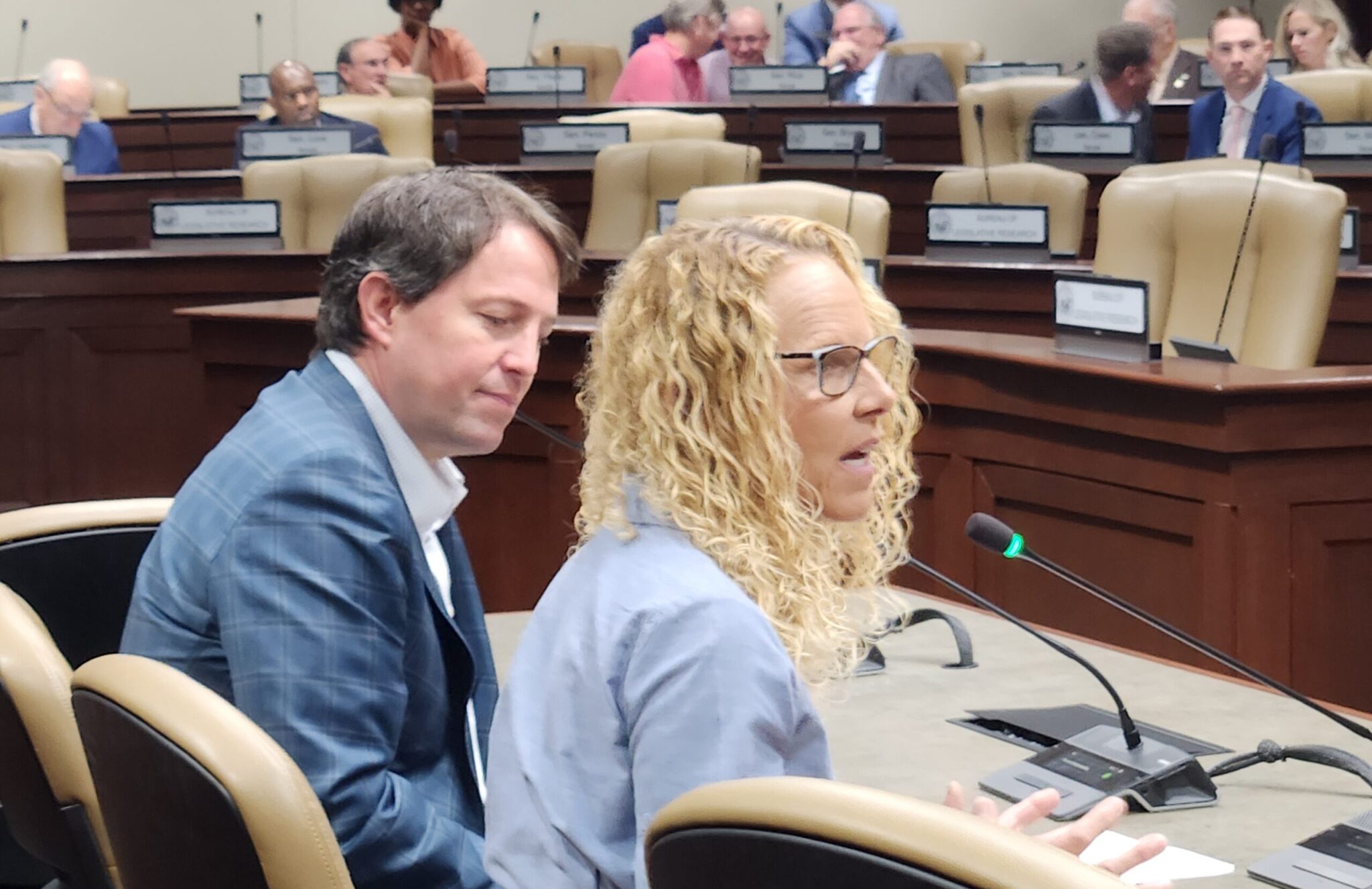
“Most importantly, the people who live in our communities will help to shape our work. We want ROOT to reflect local strengths and local priorities, not just outside ideas,” said Jessica Vincent, assistant professor and extension community and public health outreach specialist.
“County extension agents and state faculty will work alongside a wide variety of local and state-level partners, including local governments, faith communities, childcare providers, community organizations, and healthcare organizations,” she said.
While the funding runs from Oct.1, 2026-Sept. 30, 2027, “ROOT is designed to be a sustainable program to create lasting change,” Vincent said. “The goal is not simply to offer educational programs for a few years, but to help communities build the relationships and resources they need to continue long after funding ends.”
Nina Roofe, assistant vice president-Family and Consumer Sciences for UADA, said the “ROOT of Rural Health project is solving the systemic problem of poor rural health outcomes by delivering coordinated, community‑centered, prevention‑focused programming at scale.
“It addresses the intertwined challenges of chronic disease, limited access to health resources, low health literacy, and fragmented rural health infrastructure — bringing lasting, meaningful change to rural Arkansas,” she said.
“This program reflects UADA’s core values by delivering high‑quality, scalable wellness initiatives that create lasting, community‑centered impact,” Roofe said.
Partnerships
ROOT brings together individuals and organizations from across the state, including Curricula Concepts, Alzheimer’s Association, the Arkansas Department of Health, and the University of Arkansas for Medical Sciences.
Internal partnerships include extension’s Best Care Program led by Rebecca Simon, extension instructor for early childhood and family life, and Hunter Goodman, assistant professor of the Community, Professional, and Economic Development department for extension.
Rural Health Transformation Program
Under the Rural Health Transformation Program, $27.4 million was awarded to 30 projects through the Healthy Eating, Active Recreation & Transformation, or HEART, initiative, and $27.2 million for 24 projects through the Recruitment, Innovation Skills, and Education for Arkansas, or RISE AR, initiative.
UADA received its funding under the HEART initiative.
Sanders said that the driving forces behind the grant program — President Trump, Health and Human Services Secretary Robert Kennedy and Mehmet Oz, administrators of the Centers for Medicare & Medicaid Services — “had one message to the recipients of these grants. Get the money out the door quickly … because the health of our smaller communities can’t wait.”
To learn about extension programs in Arkansas, contact your local Cooperative Extension Service UADA, visit uada.edu. To learn more about ag and food research in Arkansas, visit the Arkansas Agricultural Experiment Station at aaes.uada.edu.
Discover more from
Subscribe to get the latest posts sent to your email.