By SARAH CATO | University of Arkansas Division of Agriculture
Fast Facts
- Cyclosporiasis illness confirmed in Arkansas
- Cyclosporiasis is caused by microscopic parasite Cyclospora cayetanensis
- Safety tips include thoroughly rinsing produce, following proper storage guidelines
LITTLE ROCK — The Cyclosporiasis outbreaks happening across the U.S. may sound scary, but there are simple steps families can take to minimize risk of infection.
Cyclosporiasis is an intestinal illness caused by the microscopic parasite Cyclospora cayetanensis, also known as Cyclospora. As of July 13, 2026, CDC had received reports of 1,645 laboratory-confirmed, domestically acquired cases from 34 states, including Arkansas. Although cases of cyclosporiasis have been reported in Arkansas, health officials have not confirmed whether they are connected to the current multistate outbreak.
“We know in the past that cyclosporiasis outbreaks have come from raspberries, herbs like basil and cilantro, snow peas and bagged lettuce,” said Lida Araghi, extension nutrition and food safety specialist for the University of Arkansas Division of Agriculture. “However, it’s important for consumers to properly clean all fresh fruits, vegetables and other produce.”
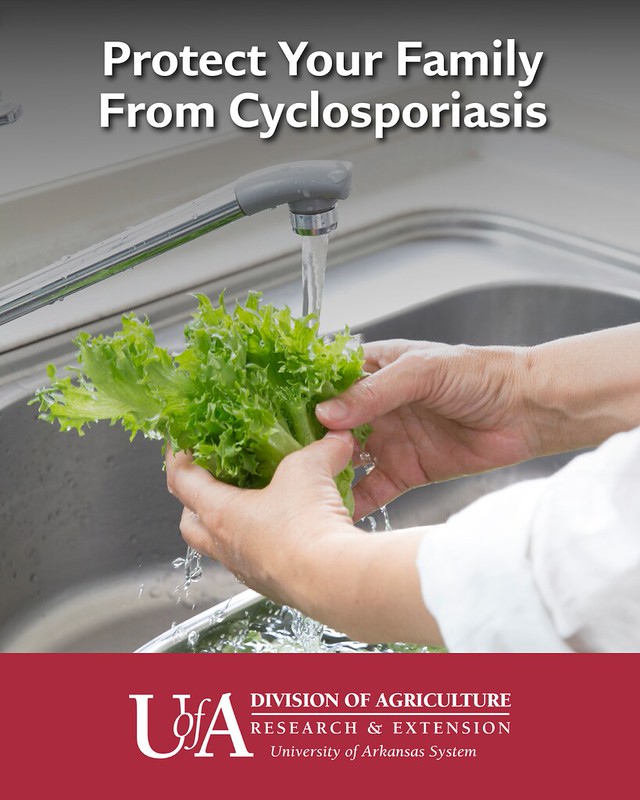
Best practices for produce safety include washing hands before and after preparing food, rinsing fruits and vegetables under running water, scrubbing firm produce with a clean produce brush, and refrigerating cut or peeled produce within two hours.
While safely handling produce is important, Araghi warns that some misinformation may be giving people false confidence.
“Washing produce can reduce contamination, but it may not remove all Cyclospora,” Araghi said. “For produce that can be cooked, heating it to at least 158 degrees Fahrenheit or 70 degrees Celsius is the safest option because Cyclospora cannot survive at that temperature.”
Araghi said ‘vinegar soaks’ have been circulating on social media as a method of controlling Cyclospora, but that has not been proven to be effective. She also stressed that soap, bleach or household cleaners should never be used to wash produce.
Know the symptoms and when to seek medical care
Symptoms of cyclosporiasis may include:
- Frequent, watery diarrhea
- Loss of appetite
- Stomach cramps or bloating
- Nausea
- Fatigue
Araghi said symptoms usually begin about one week after exposure but may appear anywhere from two days to two weeks or more after exposure.
“Cyclospora may require specific stool testing and can be treated with prescription medication,” Araghi said. “Contact your healthcare provider if you develop frequent or persistent watery diarrhea, particularly if symptoms improve and then return.”
Araghi recommends following the U.S. Centers for Disease Control and Prevention, the U.S. Food and Drug Administration, and the Arkansas Department of Health for updates on the current outbreak.
Discover more from
Subscribe to get the latest posts sent to your email.