By ANDREW DeMILLO | Arkansas Advocate
Arkansas Republicans pushing for tax cuts in recent years have portrayed Democrats as the Capitol’s version of Chicken Little, warning that the budgetary sky is falling any time there’s a reduction in revenue.
The GOP has had two arguments on its side. For one, Arkansas has avoided the widespread cuts or layoffs that befell other tax-cutting red states like Kansas last decade. Arkansas also continues to see surpluses that have helped the state accumulate billions in reserve accounts.
But a combination of federal cuts, economic uncertainty and underfunded needs next year could test whether Democrats’ dire warnings should have been heeded. They all combine for what one group called the “perfect storm.”
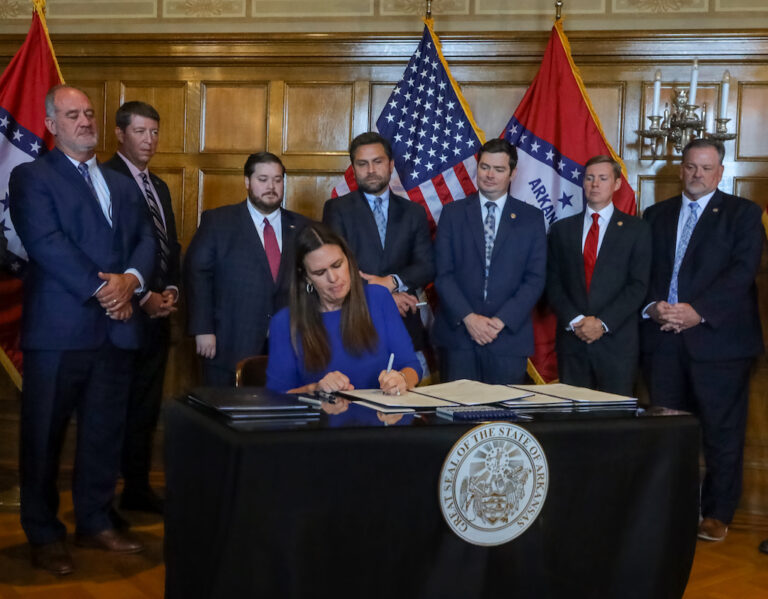
Those warnings took center stage last week as Gov. Sarah Huckabee Sanders’ plan to cut individual and corporate income taxes breezed through the Legislature, marking the fourth round of tax cuts under Sanders.
The cuts, which will cost the state nearly $192 million in the coming fiscal year and about $145 million each year after, passed along party lines in the House and Senate.
With more than a majority of both chambers signed on as co-sponsors and Republicans eager to tout tax cuts in an election year, there was little suspense about how the vote would go.
But the votes still gave Democrats time to highlight red flags ahead for Arkansas’ economy and budget that could be exacerbated by a reduction in revenue.
The biggest one is the looming impact of the One Big Beautiful Bill Act and its cuts to social safety net programs like the Supplemental Nutrition Assistance Program and Medicaid that Arkansas and other states will have to absorb.
Experts have warned that the cuts could further strain Arkansas’ healthcare providers, who are already struggling.
The past several months the state has seen several hospitals close or dramatically scale back services, in areas ranging from Jacksonville in central Arkansas to Fort Smith in the western part of the state. Those cutbacks have expanded the number of healthcare deserts, especially for labor and delivery services.
The tax cuts are also being enacted as the state faces uncertainty about the economy under the second Trump administration. That’s especially true with the Iran war, which has had an impact on fuel and fertilizer prices that could last long after the Strait of Hormuz reopens.
Those prices add to the woes of agriculture in Arkansas, which led the nation in farm bankruptcies last year.
Another area of uncertainty not mentioned during the debate is the possibility of future job losses in Arkansas and other states due to artificial intelligence, something that could further strain the state’s social safety net programs.
Opponents of the tax cuts also say they’ve been coming at the expense of other needs that have been neglected or underfunded over the years, including early childhood education and food insecurity programs. On top of those needs are expenses on the horizon, including plans for building a new prison or expanding existing ones, depending on what Sanders decides after her Franklin County prison project stalled in the Legislature.
Republicans say they’ve enacted the cuts responsibly, continuing an effort to phase out the state’s income tax that began under Sanders’ predecessors, former Govs. Mike Beebe and Asa Hutchinson.
And the state’s surpluses have helped out on needs, including the $300 million set aside as incentive for a manufacturer Arkansas hopes to lure to West Memphis.
But relying on surpluses can only go so far, especially when it comes to ongoing needs.
The sky may not end up falling as critics of the tax cuts warn next year. But the possibility of it even dipping is enough to cause concern.
Andrew DeMillo is the editor-in-chief of the Arkansas Advocate. He has covered Arkansas government and politics for more than 20 years. Arkansas Advocate is part of States Newsroom, the nation’s largest state-focused nonprofit news organization.
Discover more from
Subscribe to get the latest posts sent to your email.