
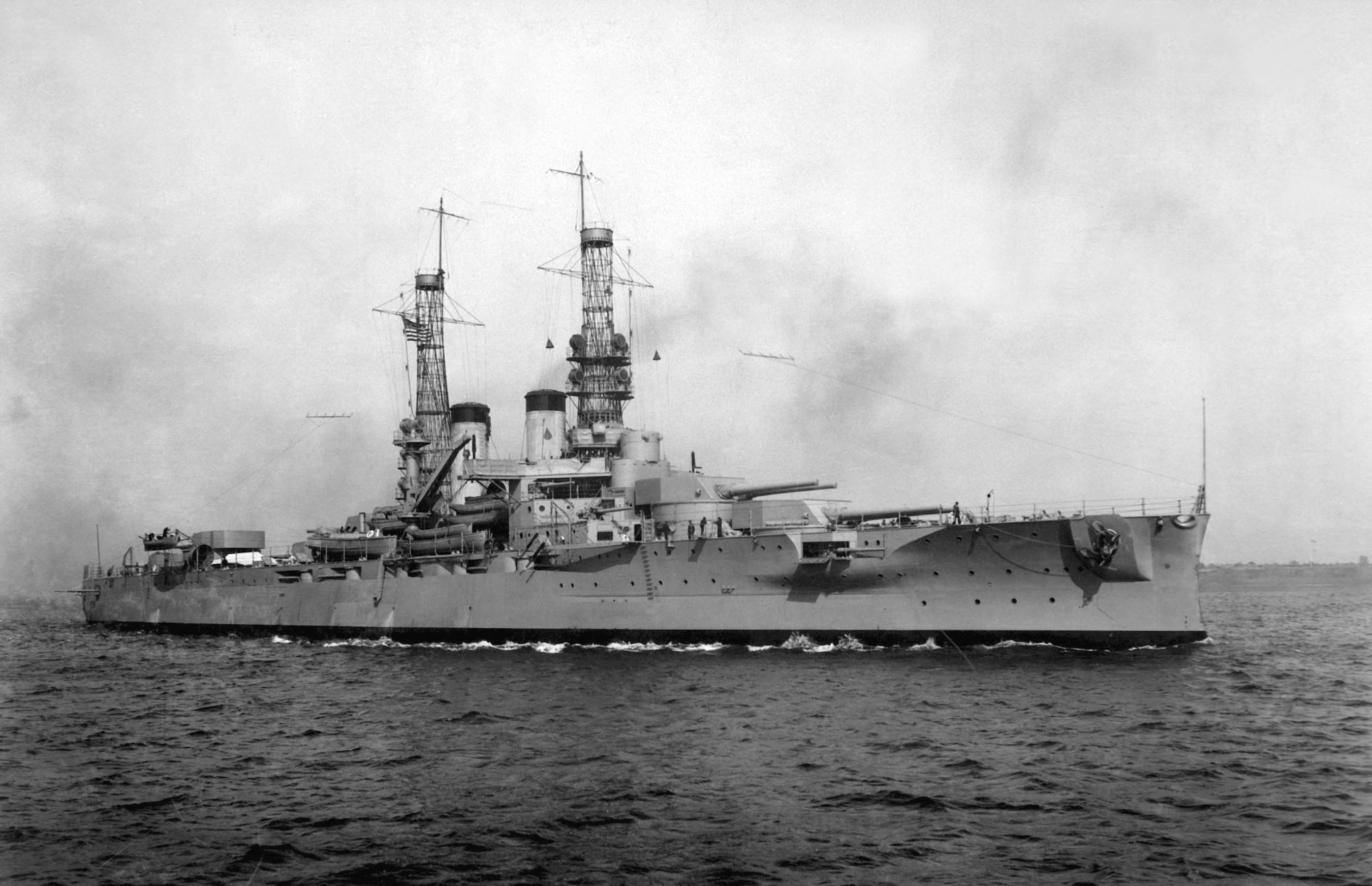

By the beginning of the 20th century, the United States had built one of the most powerful navies in the world
By KENNETH BRIDGES | For The Arkadelphian
The battleship USS Arkansas, designated BB-33 by the navy, was an achievement for the expanding power of the United States Navy. During its career, the USS Arkansas and its crew would distinguish itself at some of the most important events of the early 20th century.
Several other vessels had the name of the Natural State. During the Civil War, both Union and Confederate navies had ships named Arkansas. The Union ship was a wooden supply vessel while the Confederate version was an ironclad ship that saw only four months of service before it was sunk in the Mississippi River near Baton Rouge in 1862. In 1898, the new USS Arkansas, designated M-7, was constructed as a heavily armed monitor, but it was outdated by the time it was launched in 1900. It spent most of its career as a training ship before it was renamed the USS Ozark in 1909 just as a new battleship under construction would take the state’s name.
On January 14, 1911, the Arkansas was launched as one of the nation’s top new battleships. It boasted a dozen 12-inch guns, 21 smaller guns, and submerged torpedo launchers. The 562-foot vessel carried a crew of more than one thousand men.
In 1914, President Woodrow Wilson decided to intervene in the deteriorating civil war in Mexico and sent the Arkansas along with other ships to surround the port at Veracruz and land troops to occupy the city. During the Veracruz expedition, the Arkansas actually served in the same task force with its former namesake, the rechristened Ozark.
When the nation entered World War I in 1917, the Arkansas patrolled the Atlantic coast against possible German submarine attacks before joining the combined American-British fleet in the eastern Atlantic.
In 1919, it served as part of the fleet escorting President Wilson to the international peace conference in Paris to formally end the World War I. The vessel spent much of the interwar years as a training vessel.
The ship served as a support vessel to protect convoys from German submarine attacks in the first years of World War II. When American forces landed at Omaha Beach on D-Day, June 6, 1944, the Arkansas was part of the naval bombardment against the Germans and later bombarded German positions at Cherbourg as the Allies expanded their hold on northern France. It was rushed to the Mediterranean in August to be part of the Allied landings in southern France. The Arkansas was soon transferred to the Pacific theater. In early 1945, it served as part of the heavy naval bombardment of Japanese positions at the battles of Iwo Jima and Okinawa.
Though it had served honorably for more than three decades, the Arkansas had an ignominious retirement. To describe the end of the career of the Arkansas, it safely can be said that it ended with a blast. A nuclear blast, to be precise. As it was considered too old for continued service after the end of World War II and as many ships were being decommissioned, it was included in a US Navy test of the effect of atomic weapons on naval vessels. The tests, at Bikini Atoll in the Marshall Islands several thousand miles southwest of Hawaii, were conducted in 1946. While the Arkansas survived the first round of bombing tests, it did not survive the second.
The tradition of the Arkansas name continued with the commissioning of a nuclear-powered cruiser in 1980. This USS Arkansas, CGN-42, was decommissioned in 1998.
Discover more from
Subscribe to get the latest posts sent to your email.



2 thoughts on “History Minute: USS Arkansas one of many war ships named for Natural State”
Comments are closed.