
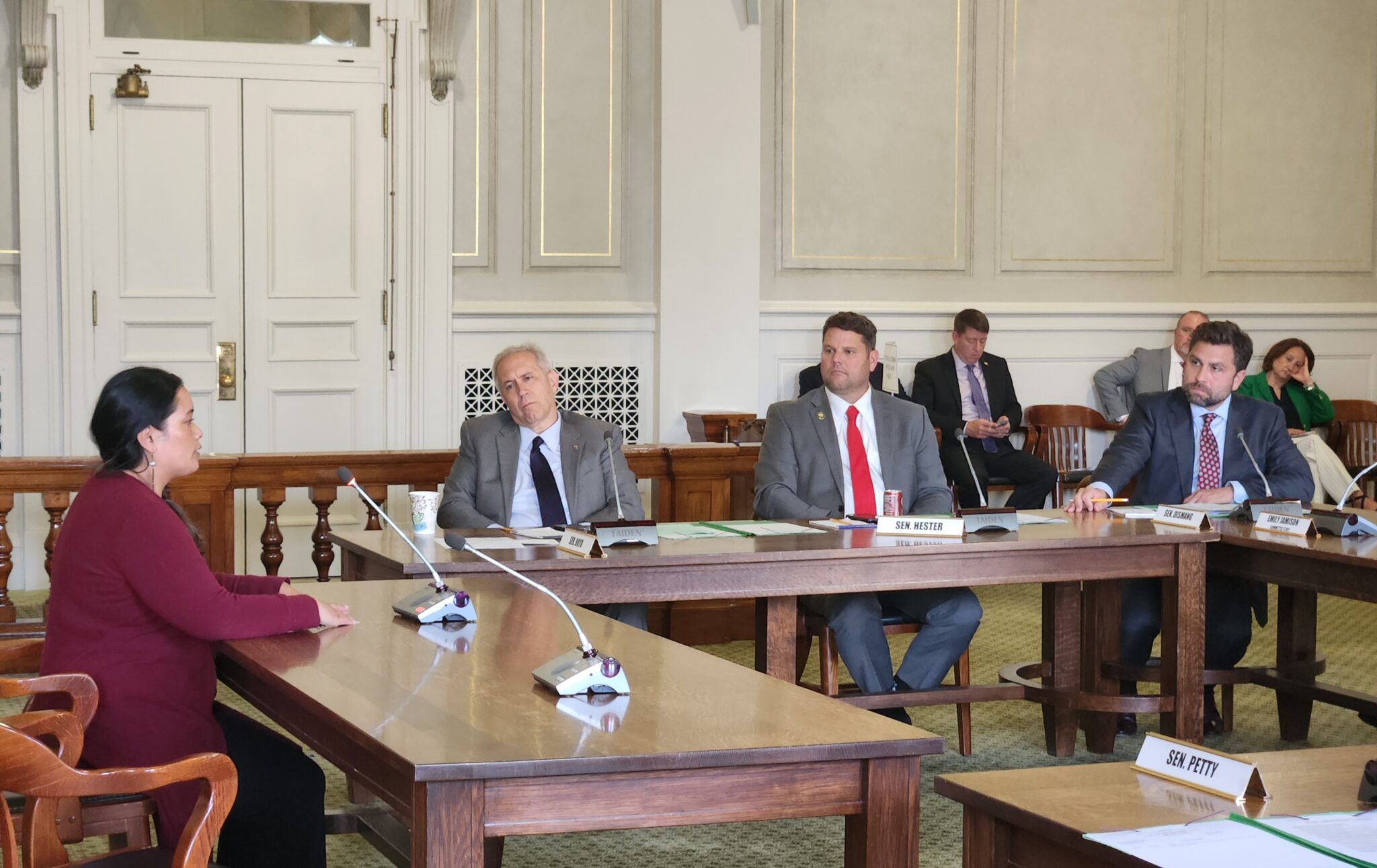
MORE THAN A BUDGET — Michelle Pedro (left) of Springdale, representing the Arkansas Coalition of Marshallese, speaks against proposed income tax cuts before the Senate Revenue and Tax Committee on May 4, 2026. Republican committee members Sen. Justin Boyd of Fort Smith, Sen. Bart Hester of Cave Springs and Sen. Jonathan Dismang of Searcy listen to testimony. | Photo by Tess Vrbin/Arkansas Advocate
By TESS VRBIN | Arkansas Advocate
Arkansas lawmakers advanced what would be the state’s fourth income tax cut in four years Monday despite critics’ warnings that reducing revenue could jeopardize social services.
Senate Bill 1 and House Bill 1001 would cut the top individual income tax rate from 3.9% to 3.7% retroactive to Jan. 1, 2026, and the corporate tax rate from 4.3% to 4.1% effective Jan. 1, 2027. The Revenue and Tax committees in both chambers passed their respective bills Monday, the first day of a special session expected to end Wednesday.
Republican officials, including Gov. Sarah Huckabee Sanders, support phasing out the state’s income tax entirely as Tennessee and Texas have done.
The tax cuts’ Republican sponsors, Sen. Jonathan Dismang and Rep. Les Eaves of Searcy, noted that Arkansas continuously collects a revenue surplus while reducing income taxes.
The six people who testified against the bills before both committees said the status quo for poor and working Arkansans is untenable and tax cuts will worsen existing problems.
“We are essentially telling the sick and the elderly that their health and dignity are less important than a line item in the budget,” said Michelle Pedro, a single mother from Springdale, representing the Arkansas Coalition of Marshallese.
The bill’s opponents said the state should direct its tax dollars to strengthening education, feeding the hungry and bolstering healthcare providers instead of implementing tax cuts that disproportionately benefit high earners and have little impact on working families.
They cited Arkansas’ high rate of food insecurity, farmers’ financial instability and hospitals reducing or eliminating services as reasons for their concerns, especially while both Medicaid and nutrition assistance are facing steep cuts from the federal government.
“We shouldn’t be competing with neighboring states for the lowest tax rate,” said Anna Morshedi, policy director at the Arkansas Appleseed Legal Justice Center. “We should be competing with neighboring states for the best learning, health and life outcomes in the South, and winning those far more important contests are going to require investments we can’t afford if Arkansas keeps cutting revenue.”
Morshedi and other opponents criticized the state’s increasing investment in school vouchers, projected at over $300 million in the fiscal year 2027 budget Sanders signed last week.
Two pastors from Little Rock spoke against the bills: Haley Jones Wells of First United Methodist Church and Preston Clegg of Second Baptist Church.
“Surely we can agree that the ultimate bottom line is not merely net revenue, but human flourishing,” Clegg told the House panel.
Pete Gess, the Arkansas Advocates for Children and Families economic policy director, and Missy Joyce, mother of a disabled adult son, also spoke against the tax cuts.
Joyce said her son was born with a brain injury, is physically reliant on others to meet his basic needs and sees “constant turnover and chaos” from his underfunded care providers. She said tax cuts will only put more strain on supported living systems.
The House committee’s few Democrats voted against the tax cuts, but Republicans on both committees emphasized that tax cuts both help working families and make Arkansas a competitive business environment.
“The idea that we can’t help taxpayers until we solve all of society’s social ills is just moving the goalposts to a point where we would never do anything to help taxpayers if that were the standard,” said Rep. David Ray, a Maumelle Republican and the House Revenue and Tax committee vice chair.
The House and Senate are expected to take up the tax cut measures on Tuesday morning. A majority of lawmakers in each chamber have signed on as co-sponsors of the bills.
Discover more from
Subscribe to get the latest posts sent to your email.


