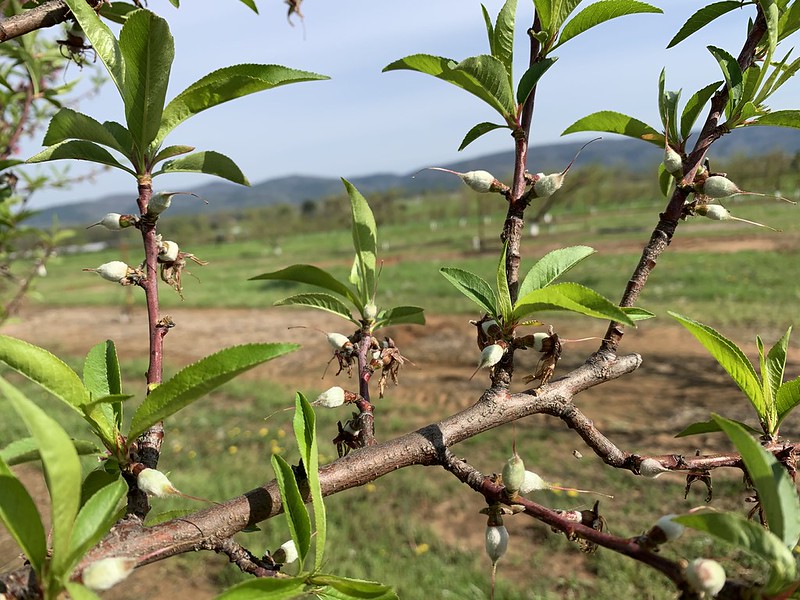
PEACHES FOR FREEZE — The timing of the bud and bloom stages of many peach trees in Arkansas left them particularly vulnerable to the below-freezing temperatures that covered most of the state in mid-March. | Division of Agriculture image
By RYAN McGEENEY | University of Arkansas System Division of Agriculture
The 2026 Arkansas peach crop was likely eliminated during a mid-March weather event that saw freezing temperatures in the low 20s across the state.
Amanda McWhirt, extension fruit horticulture specialist for the University of Arkansas Division of Agriculture, said the preceding weeks of warm weather earlier in March had left most of the statewide crop particularly vulnerable.
“Unfortunately, peaches in many parts of the state had broken bud and were in full bloom,” McWhirt said.
Peach flowers in open bloom are typically damaged somewhere around 27 degrees Fahrenheit, she said.
Arkansas farmers grow between 100 and 200 acres of peaches across the state, typically as one part of a larger operation, McWhirt said. Most Arkansas growers tend to prioritize early ripening peaches, which were easy prey for the low temperatures struck in March.
Although peaches are an annually blooming crop with no “second chances” during a given season, McWhirt is encouraging farmers to continue to irrigate and care for their trees to lay the groundwork for a healthy crop next year.
“But because peach trees don’t have a crop on them, we have to be careful about not over-fertilizing them,” McWhirt cautioned. “They’ll wind up growing very aggressively, creating the need for a lot more pruning next winter.”
The reduction or elimination of an Arkansas peach crop is not unusual, she said, noting that the state typically only sees a full harvest about one out of every three to four years. The routine impact on crops has, in fact, led to a decline in peach growing efforts over the past decade, McWhirt said.
Some varieties of blueberries were also damaged during the March cold snap.
“They were in a similar situation, having broken bud and were in peak bloom, particularly for southern highbush and some rabbiteye blueberries,” McWhirt said. “In particular the southern highbush type is very early to bloom, and they’re in a similar boat to peaches, where the majority of the crop was lost.”
“If people had northern highbush types, they were still dormant,” she said. “They’ve just now, in the past week or so, begun to flower. I think we’ll have a fine crop with those types. But a lot of people have southern highbush because, again, they like the earlier fruit, particularly in central and southern Arkansas.”
Arkansas farmers grow between 200 and 300 acres of blueberries each year, McWhirt said.
Discover more from
Subscribe to get the latest posts sent to your email.