
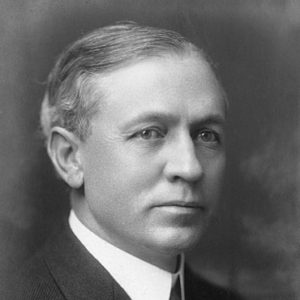

By KENNETH BRIDGES
As the 20th century dawned, Little Rock residents looked at the continuing problems of crime and corruption in the city and decided they would not tolerate it any longer. Charles Taylor was one such man, and as mayor, he brought that reform energy to city government, creating a modern city worthy of being a state capital.
Charles Taylor was born in Mississippi in 1868. After his father’s death in 1880, the surviving family moved to Little Rock. He was a hard worker, graduating high school and briefly attending a business school before accepting a clerk position at a local hardware store. Over the next few years, he would come to work as a traveling salesman for other hardware retailers.
Taylor had been active in the community, belonging to several civic organizations. Also a man of faith, he served as head of the Sunday School classes at Little Rock’s Second Baptist Church for 16 years.
In 1910, Mayor W. R. Duley had announced that he would not seek re-election. Alderman John Tuohey had become the leading establishment candidate, backed by veteran politicians and insiders. However, the business-as-usual inefficiency and corruption that had become common in city politics was becoming too much for residents to bear.
In November, Taylor announced his candidacy for mayor, calling for reform at all levels of city government. He had never run for office before, but he relied on his business experience as his chief qualification. Taylor called for the city to be run in a more “business-like” manner. Throughout the campaign, he had called for modernizing city services, improving public health, and ridding the city of crime.
In the spring 1911 primary, Tuohey came out ahead. Taylor’s allies immediately claimed fraud, pointing to hundreds of fraudulent votes. Many of these votes were thrown out, prompting a runoff that Taylor won.
Taylor wasted no time. He enacted ambitious projects to pave streets and sidewalks across the city as well as installing electric streetlights for safer neighborhoods. He created a new Health Department to regulate the local hospital and city hygiene. Regular trash collection and regular sanitary inspections of food services and the water supply began. Disease rates plummeted.
The fire department’s horse-drawn wagons were retired, replaced with automatic pumps, fire hydrants, and a modern ladder truck to combat high-rise fires. A new fire station was built downtown as well as neighborhood fire stations.
He created a vice commission to combat the city’s problems with gambling, alcohol, and prostitution. Saloons were tightly regulated, houses of prostitution were shuttered, and gambling halls were raided. Taylor reportedly led several raids himself.
He went even further to propose a new hospital for Little Rock as well as new parks and the annexation of North Little Rock. While Pulaski Heights was annexed, North Little Rock stayed independent, and financing forced him to abandon his more ambitious plans.
While mayor, Arkansas completed the modern State Capitol building in 1915. The city’s first airport was constructed in 1917 as a U. S. Army Air Corps training field, which the city would buy in the 1930s. The population had increased nearly 40 percent under Taylor, going from just over 45,000 to nearly 65,000 residents.
With eight years as mayor, Taylor became the longest-serving mayor in the city’s history, a record that would stand for decades until 1993. In spite of some setbacks, he had created a safer and healthier city with all the conveniences the twentieth century had to offer. He returned to the business world and would never again run for office and died in Pine Bluff in 1932.
Discover more from
Subscribe to get the latest posts sent to your email.


