By TRACI RUSHING | University of Arkansas Division of Agriculture
Fast Facts
- Sadeghi examines how disturbances affect water movement, storage and quality
- Research needed for managing forests, protecting water resources
- Husband-wife team brings complementary expertise to UAM’s forestry program
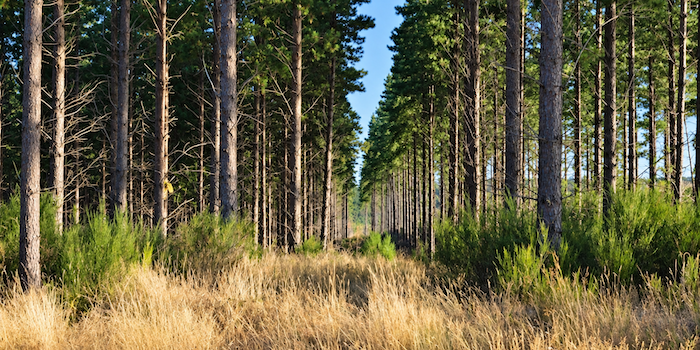
MONTICELLO — Forest management involves more than trees. Water plays a critical role, too, and understanding how it moves through forests is at the heart of ecohydrologist Seyed Mohammad Moein Sadeghi’s research.
Sadeghi’s research examines how vegetation, soils and ecological processes interact with the water cycle. He recently joined the Arkansas Forest Resources Center, a partnership between the University of Arkansas Division of Agriculture and the University of Arkansas at Monticello that advances forest sustainability.
“Flooding and drought create ongoing challenges, and Dr. Sadeghi brings valuable expertise to help us better understand and manage water resources in forest ecosystems through research and teaching,” said Michael Blazier, dean of the College of Forestry, Agriculture, and Natural Resources and director of the Arkansas Forest Resources Center.
Sadeghi examines how forest structure, tree species, management practices and environmental disturbances affect water movement, storage and quality.
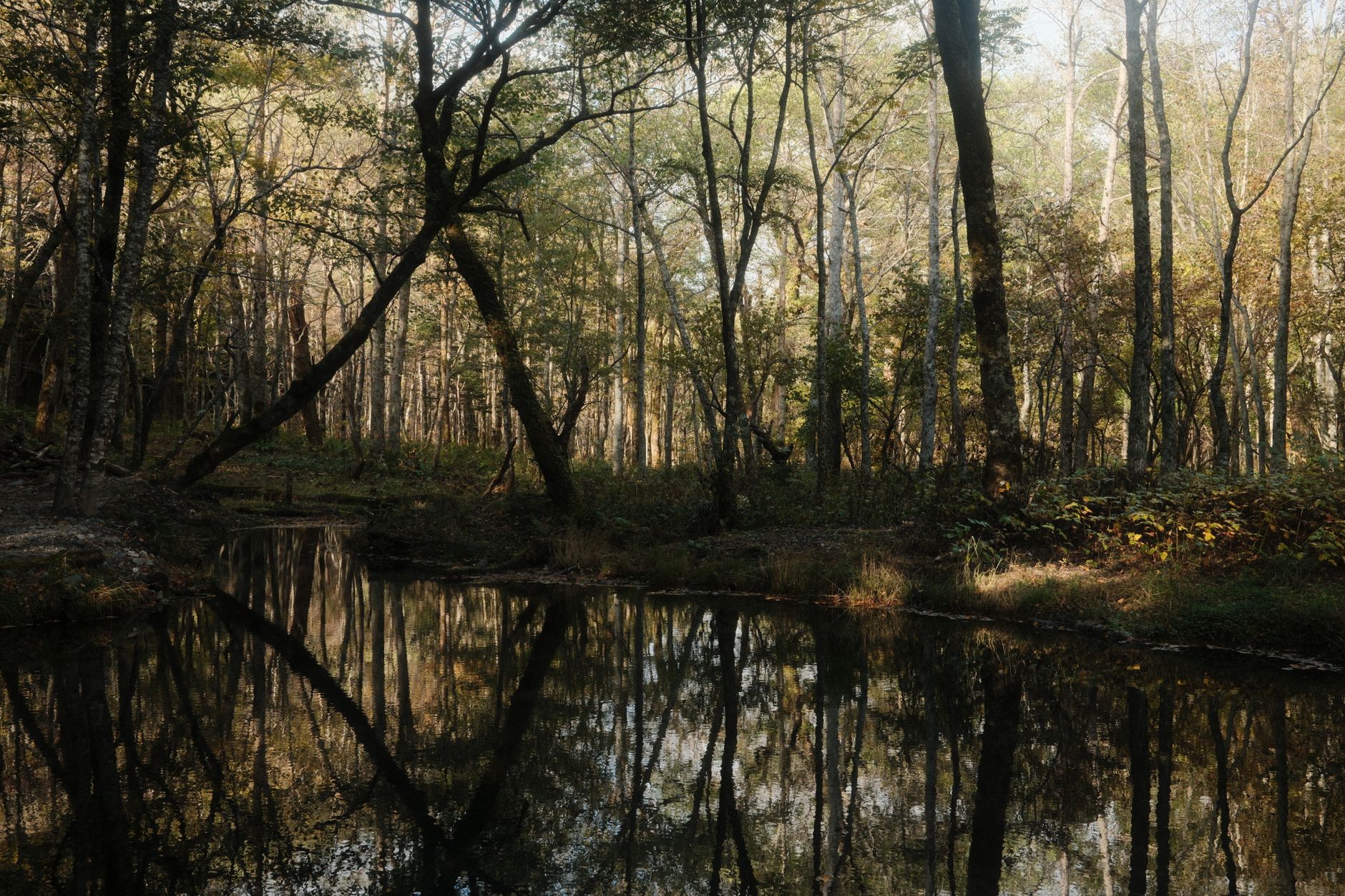
“I want to connect aboveground and belowground hydrology,” Sadeghi said. “My research examines what happens to rainfall after it reaches a forest: how much is intercepted by leaves and bark, how much reaches the forest floor, how water moves through the soil, and how these processes ultimately influence groundwater and streamflow. Understanding these connections is essential for managing forests while protecting water resources.”
Research by Sadeghi will also explore how disturbances such as timber harvesting, drought, fire, disease and other changes in forest conditions can affect water quantity and quality. These disturbances can alter infiltration, runoff, erosion, sediment transport and streamflow, with important implications for forest productivity and watershed health.
Following water through the forest
A lifelong appreciation for trees and the environment, instilled in him by his father, led Sadeghi into a career in forest ecohydrology. As a student, he became particularly interested in dendrology, the study of trees, and silviculture, the practice of establishing, growing and managing forests.
His master’s research examined the hydrological effects of tree plantations in a semiarid environment, leading him to explore the relationships among forests, water and the environment. Doctoral studies continued that work by examining water balance in different forest ecosystems using empirical, process-based and machine-learning modeling approaches.

At UAM, he plans to develop courses and research opportunities that help students understand how water moves through a forest, from rainfall reaching the tree canopy to water entering the soil, replenishing groundwater and eventually reaching streams and wetlands.
His teaching plans include undergraduate watershed management and a graduate-level course in forest ecohydrology, emphasizing the connections between ecological processes, hydrological measurements and sustainable forest management.
Sadeghi also hopes to develop undergraduate research opportunities that allow students to collect and analyze field data while gaining practical experience in plot establishment, GPS use, water-quality sampling and measurements of tree and stream characteristics.
Azade Deljouei, a forest engineer and Sadeghi’s wife, was also recently hired by the College of Forestry, Agriculture and Natural Resources. Together, they bring complementary expertise to UAM’s forestry program, Blazier said. Their work spans forest-roads engineering, soil erosion and stabilization, silviculture, and the complex relationships between forests and water resources.
To learn more about ag and food research in Arkansas, visit aaes.uada.edu. Follow the Arkansas Agricultural Experiment Station on LinkedIn and sign up for our monthly newsletter, the Arkansas Agricultural Research Report. To learn more about the Division of Agriculture, visit uada.edu. To learn about extension programs in Arkansas, contact your local Cooperative Extension Service agent or visit uaex.uada.edu.
Discover more from
Subscribe to get the latest posts sent to your email.