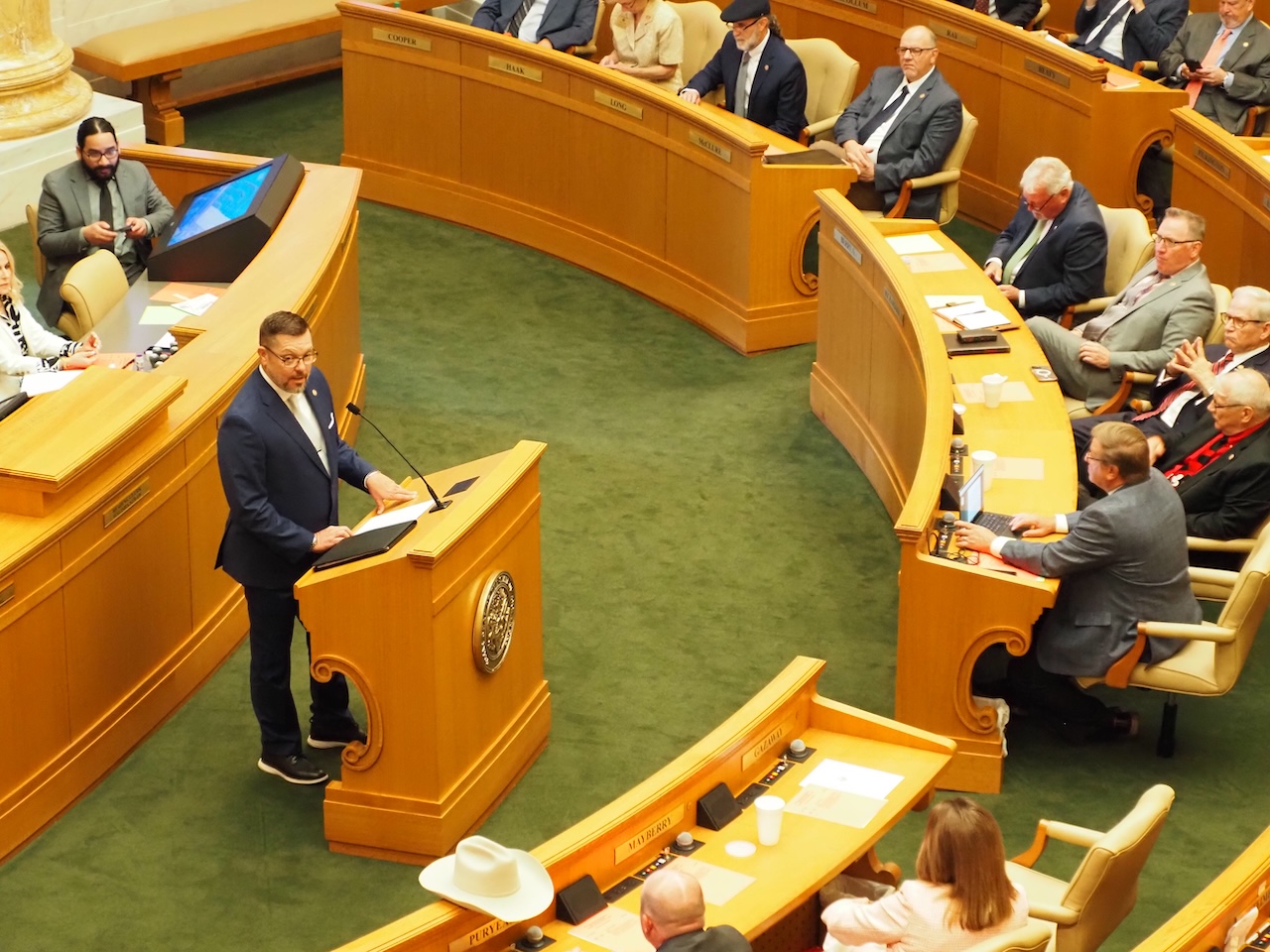
Rep. Bart Schulz, R-Cave City, addresses the Arkansas House of Representatives during a special session on June 18, 2024. | Mary Hennigan/Arkansas Advocate
By AINSLEY PLATT | Arkansas Advocate
A resolution seeking permission from Arkansas lawmakers to introduce a bill that would increase the state’s homestead property tax credit to $675 advanced out of committee Wednesday.
The House Rules Committee rejected five other non-fiscal resolutions, including one involving Sharia Law and an effort to curtail Arkansas’ Educational Freedom Account program, which provides taxpayer dollars to students attending private schools or who are homeschooled.
“As a general rule, I am not a fan of running non-appropriations bills in fiscal session,” said Rep. Bart Schulz of Cave City, the sponsor for the homestead tax credit resolution. “In a time where gasoline is high, groceries are high, I was not comfortable with sitting on this for a year.”
Arkansas lawmakers meet in regular sessions in odd-numbered years when they take up a broad range of issues. In even-numbered years, the Legislature holds fiscal sessions where the focus is on the budget. Non-fiscal bills need at least a two-thirds vote in the House and the Senate to be considered during the fiscal session.
Both the House and Senate must approve Schulz’ resolution before he can file his homestead tax credit bill. The credit was created by a voter-approved constitutional amendment in 2000, and the General Assembly enacted a half-cent sales tax to pay for the credit.
The credit was $375 when Gov. Sarah Huckabee Sanders took office in 2023, and lawmakers have approved multiple increases that have raised the amount to $600. Schulz is proposing increasing the credit by $75.
Five other resolutions, all involving cryptocurrency mining, were pulled from consideration by Rep. Ron McNair of Alpena and Sen. Bryan King of Green Forest, both Republicans, after a sixth cryptocurrency mining resolution was rejected.
House Resolution 1016, introduced by Rep. Marcus Richardson, a Republican from Harvey, generated the most debate of the resolutions the committee considered and was ultimately rejected. The proposed Arkansas Property Rights Protection From Sharia Law Act would safeguard against “peer pressure” to comply with provisions of Islamic law that restricts property sales, Richmond told the Advocate last week.
“If we don’t do it, then we’re going to have victims who possibly buy into something and then come to realize that this wasn’t the agreement I thought and they’re going to find themselves in a bad situation,” Richardson told the committee.
GOP Rep. Jeremiah Moore of Clarendon said he had concerns the proposal would not apply to a white supremacist compound in northeast Arkansas, and that membership agreements for hunting clubs could be affected.
“If we’re trying to worry about disclosures for Sharia Law, I would also like to cover the white supremacists up near Ravenden,” Moore said. “I’m pretty sure they’re trying to do the exact thing that you’re describing here, which is you purchase into an LLC or to some sort of corporation that owns the actual real estate, and you’re bound by their laws or their rules and regulations.”
Other lawmakers expressed concerns about how the proposed bill would affect arbitration clauses or homeowners association rules.
An effort to restrict the state’s school voucher program, sponsored by Rep. Jim Wooten of Beebe and King, also failed.
Wooten, a former director of Arkansas’ finance department under former Gov. David Pryor, and King, who presented the resolution to the committee, said the bill was necessary to stave off what they described as a future financial disaster caused if the cost of the program continued growing. Committee members were not convinced.
“This would create an emergency, this would throw us into turmoil,” said Republican Rep. Britt McKenzie of Rogers.
Discover more from
Subscribe to get the latest posts sent to your email.