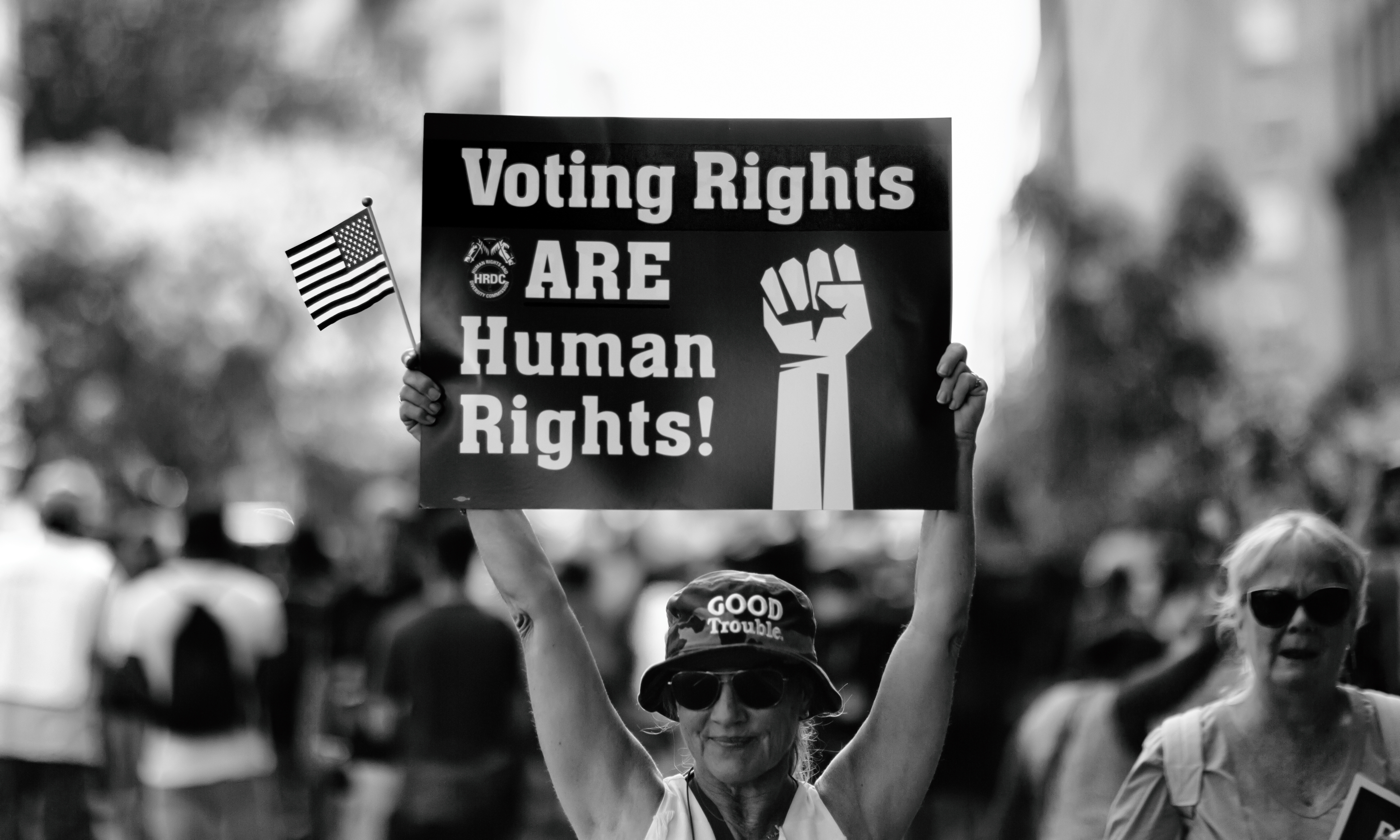
VOTING RIGHTS: A federal appeals court tossed out an Arkansas case that challenged a law limiting how many voters one person can help at the polls, declaring that the federal Voting Rights Act doesn’t allow an individual to sue for enforcement of the law. | Johnny Silvercloud/Shutterstock
By SONNY ALBARADO | Arkansas Advocate
A federal appeals court on Monday overturned a lower court ruling that had prevented enforcement of an Arkansas law limiting the number of voters someone can assist at the polls.
The 8th U.S. Circuit Court of Appeals’ ruling vacated a permanent injunction granted by a federal district judge that declared Act 658 of 2009 in violation of the federal Voting Rights Act. Monday’s ruling also overturned the award of attorneys’ fees granted by U.S. District Judge Timothy Brooks of Arkansas’ Eastern District.
Act 658 prohibits someone other than a poll worker from helping more than six voters mark and cast their ballots. Immigrant advocacy group Arkansas United sued in 2020 to block enforcement of the six-voter limit, saying it violated the Voting Rights Act. Arkansas United traditionally helps voters with limited English skills at the polls.
Brooks enjoined enforcement of the six-voter limit in 2022, and the circuit court stayed the injunction about two months before that year’s elections. The state filed an updated appeal challenging Brooks’ award of about $103,000 in attorneys fees to Arkansas United and its co-plaintiffs in 2023.
Monday’s circuit court ruling used the same reasoning the court used in an Arkansas redistricting case in which it declared that only the U.S. attorney general can enforce the Voting Rights Act’s provisions. The historic voting rights law does not grant individuals or private organizations the right to sue for enforcement, the appeals court decided in 2023, thereby upending years of precedent.
“In Arkansas State Conference NAACP v. Arkansas Board of Apportionment,” the appeals court said Monday, “… we held there is no private right of action under § 2 of the Voting Rights Act (VRA). Here, we are asked to decide whether there is a private right of action under § 208 of the VRA. Like the provision at issue in Arkansas State Conference, we conclude the text and structure of § 208 do not create a private right of action.”
The circuit court ruling says Section 208 “speaks only of the assistance that a voter ‘may be given’ … it is silent as to ‘who can enforce it.’”
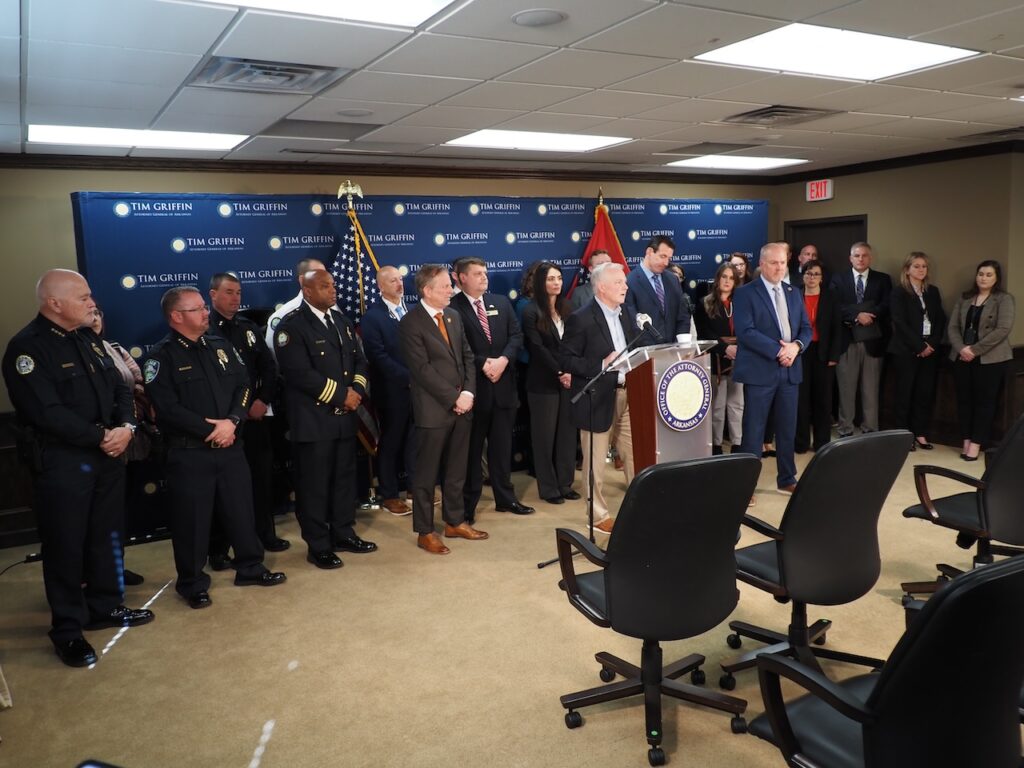
In a statement Monday, Arkansas Attorney General Tim Griffin said the circuit judges “properly determined that the district court erred by denying the State’s motion for summary judgment and by ruling for the plaintiffs.”
Monday’s decision means election officials can continue to enforce the law and voters have confidence in elections, he said.
Act 658 of 2009, signed into law by then-Gov. Mike Beebe, a Democrat, “protects the right to vote free from undue influence or manipulation by limiting the number of voters that one person can assist in marking ballots to six,” Griffin said.
Griffin noted that this “commonsense approach to protecting our election process went unchallenged until 2020, when Arkansas United filed a lawsuit challenging the law shortly before midnight on the day before the general election.”
Arkansas United directed requests for comment to the Mexican American Legal Defense and Educational Fund, whose attorneys are representing the nonprofit organization in the case. MALDEF did not return a request for comment by deadline.
Discover more from
Subscribe to get the latest posts sent to your email.