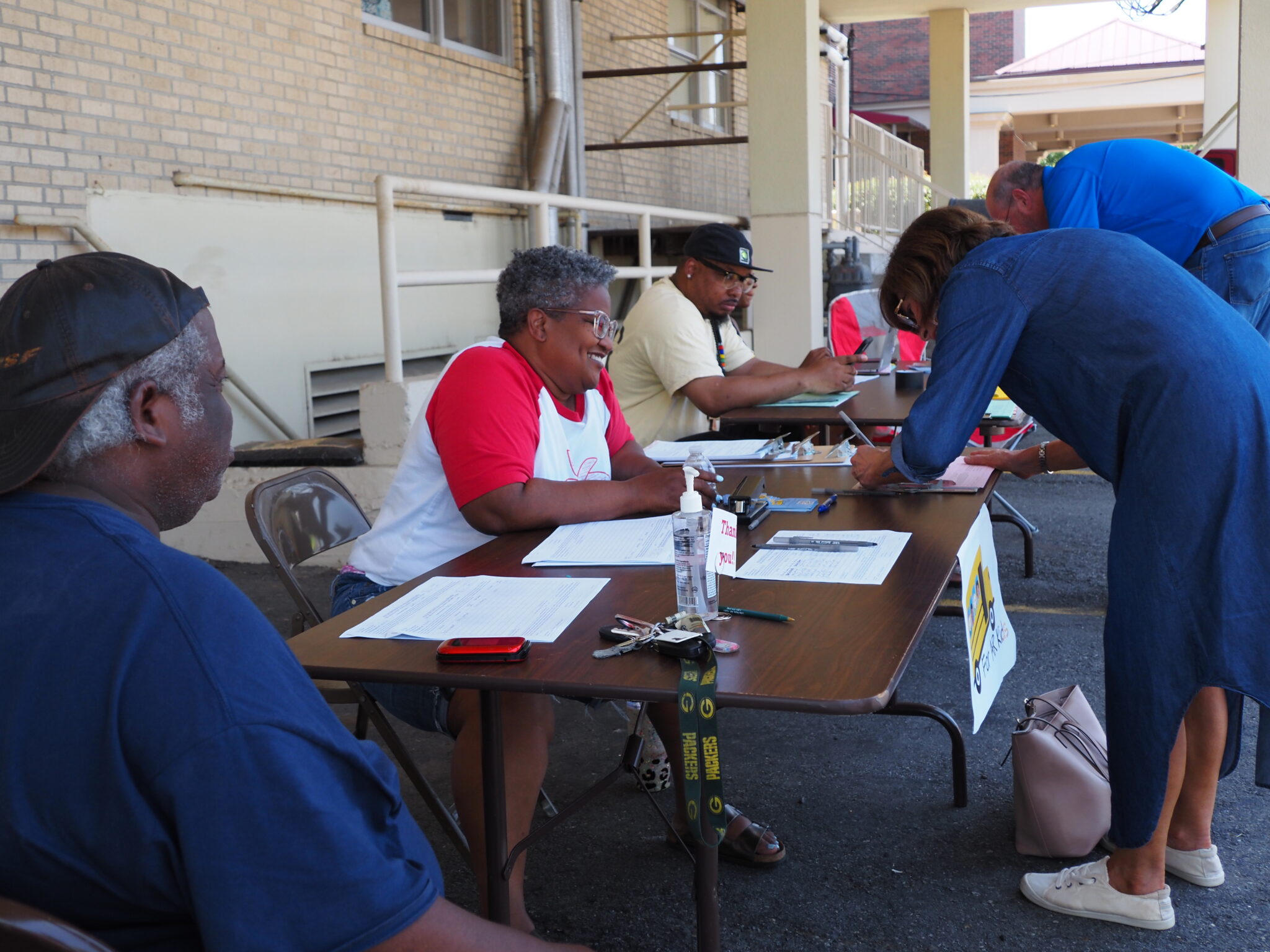
PHOTO: Arkansans sign petitions in support of proposed ballot initiatives in Little Rock on July 2, 2024. | Mary Hennigan/Arkansas Advocate
By ANTOINETTE GRAJEDA | Arkansas Advocate
An Arkansas judge on Thursday blocked implementation of a 2023 state law that increased the signature requirements for measures to qualify for the ballot.
Pulaski County Circuit Judge Shawn Johnson’s ruling prevents the state from enforcing Act 236 of 2023, which increased the number of counties where ballot initiative groups must gather a minimum number of signatures from 15 to 50.
The League of Women Voters of Arkansas filed a lawsuit in 2023, arguing the measure violated the Arkansas Constitution.
“We filed this lawsuit three years ago immediately following its passage and today we celebrate the striking down of this thinly veiled attempt to silence the voters,” Arkansas League President Bonnie Miller said in a statement. “This is a good day for the people.”
Spokesperson Jeff LeMaster said the attorney general’s office has reviewed the court’s ruling and plans to appeal. The majority of the Arkansas Supreme Court’s members have Republican ties, and it’s unclear how quickly justices would take up the appeal.
Johnson said the law “clearly and unmistakably conflicts” with Article 5 Section 1 of the Arkansas Constitution, which requires sponsors of ballot measures to collect signatures from “at least fifteen counties of the state.” Act 236 changes the number to “at least fifty counties.”
In his 15-page order, Johnson wrote that the law “impermissibly restricts the right of the people to petition for initiated acts—a reserved power expressly guaranteed by the Arkansas Constitution.”
The state had argued the new 50-county requirement complied since the constitution refers to “at least” 15. The state also claimed the case should be dismissed under sovereign immunity, the legal doctrine that the state cannot be sued in its own courts.
Johnson said the sovereign immunity defense lacked merit, noting there’s an exception to sovereign immunity when the actions alleged by the state are unconstitutional.
The League of Women Voters and Republican Sen. Bryan King of Green Forest filed the lawsuit against the Arkansas secretary of state just days after lawmakers approved Act 236 in March 2023.
In July 2024, the court found King did not have standing, and he was dismissed from the case.
The 2023 law is one of several state legislators have passed in recent years that restrict the petition and referendum process. Proponents of the laws say they protect the integrity of the direct democracy process while opponents argue they hamper Arkansans’ access to propose their own laws.
Direct democracy is the process by which Arkansans can propose new laws or constitutional amendments and place them on the ballot for a statewide vote. Arkansas is one of 24 states that allow citizen-led initiatives, according to the National Conference of State Legislatures.
Johnson’s ruling will affect groups like the League’s ballot question committee, Save AR Democracy, who is currently collecting signatures for a proposed constitutional amendment to strengthen Arkansas’ direct democracy process.
Sponsors of ballot measures are required to collect 90,704 signatures for constitutional amendments, 72,563 signatures for initiated acts and 54,422 signatures for referendums by July 3.
With Johnson’s ruling, those signatures will only need to come from 15 of Arkansas’ 75 counties.
During the 2024 election cycle, the requirement to collect signatures from 50 counties was a hurdle for proposed measures related to a sales tax exemption for feminine hygiene products and diapers and government transparency.
While other measures related to education and abortion collected signatures from 50 counties, they did not meeting the minimum signature requirement and were disqualified for a paperwork error, respectively.
Discover more from
Subscribe to get the latest posts sent to your email.