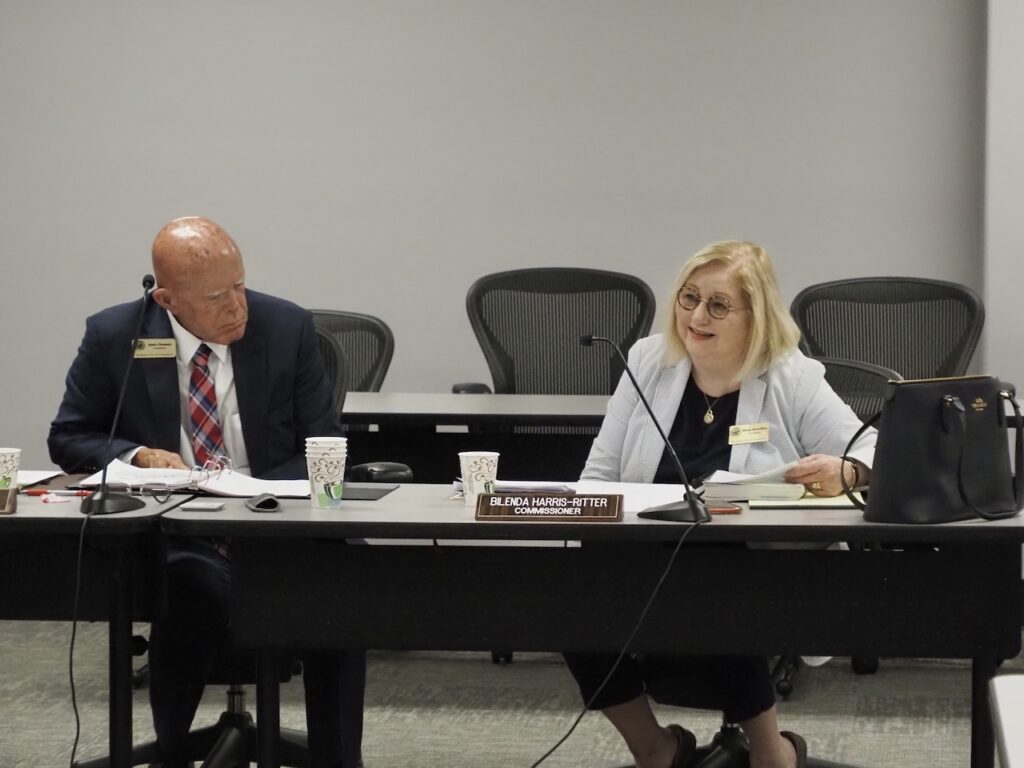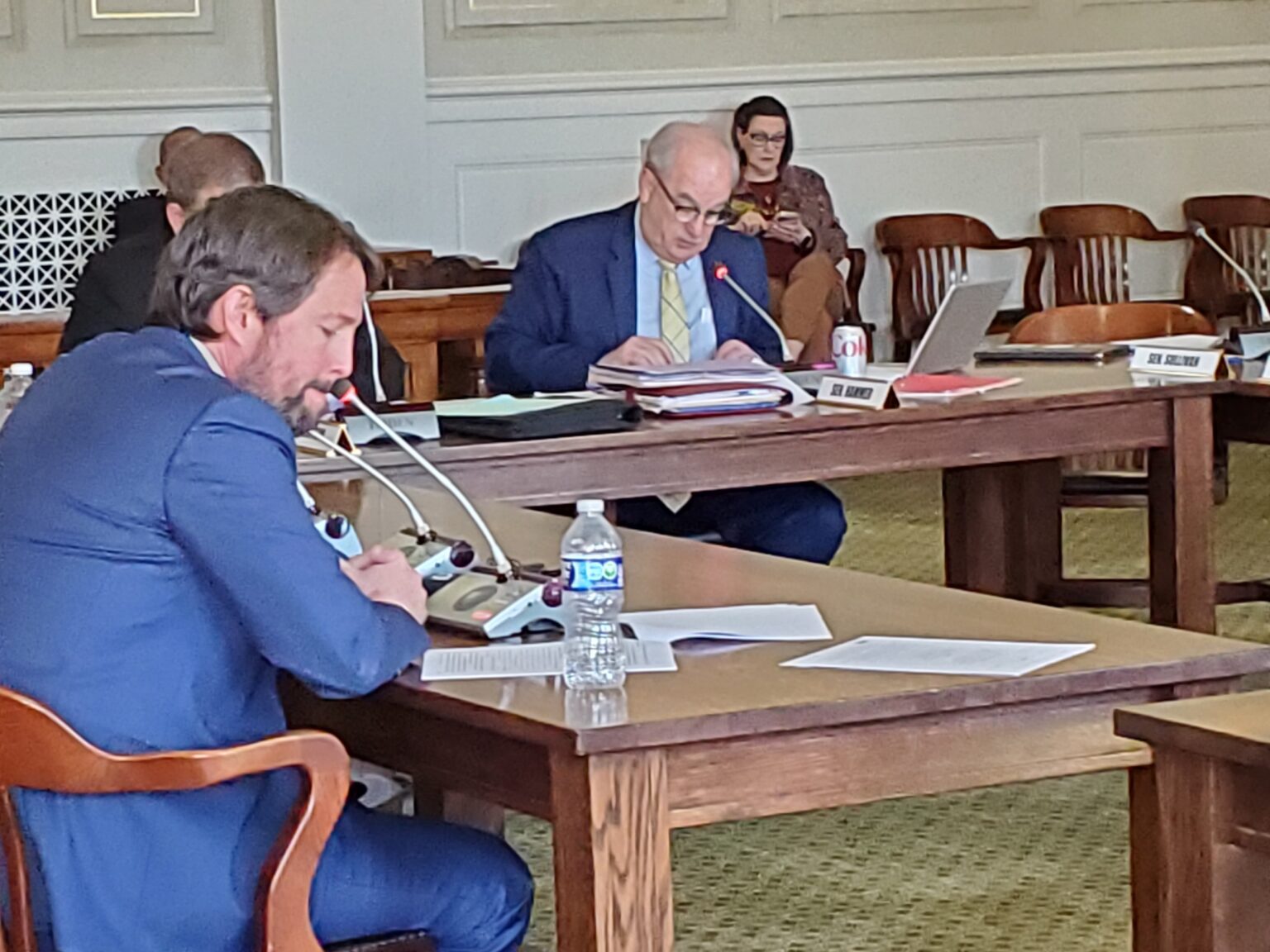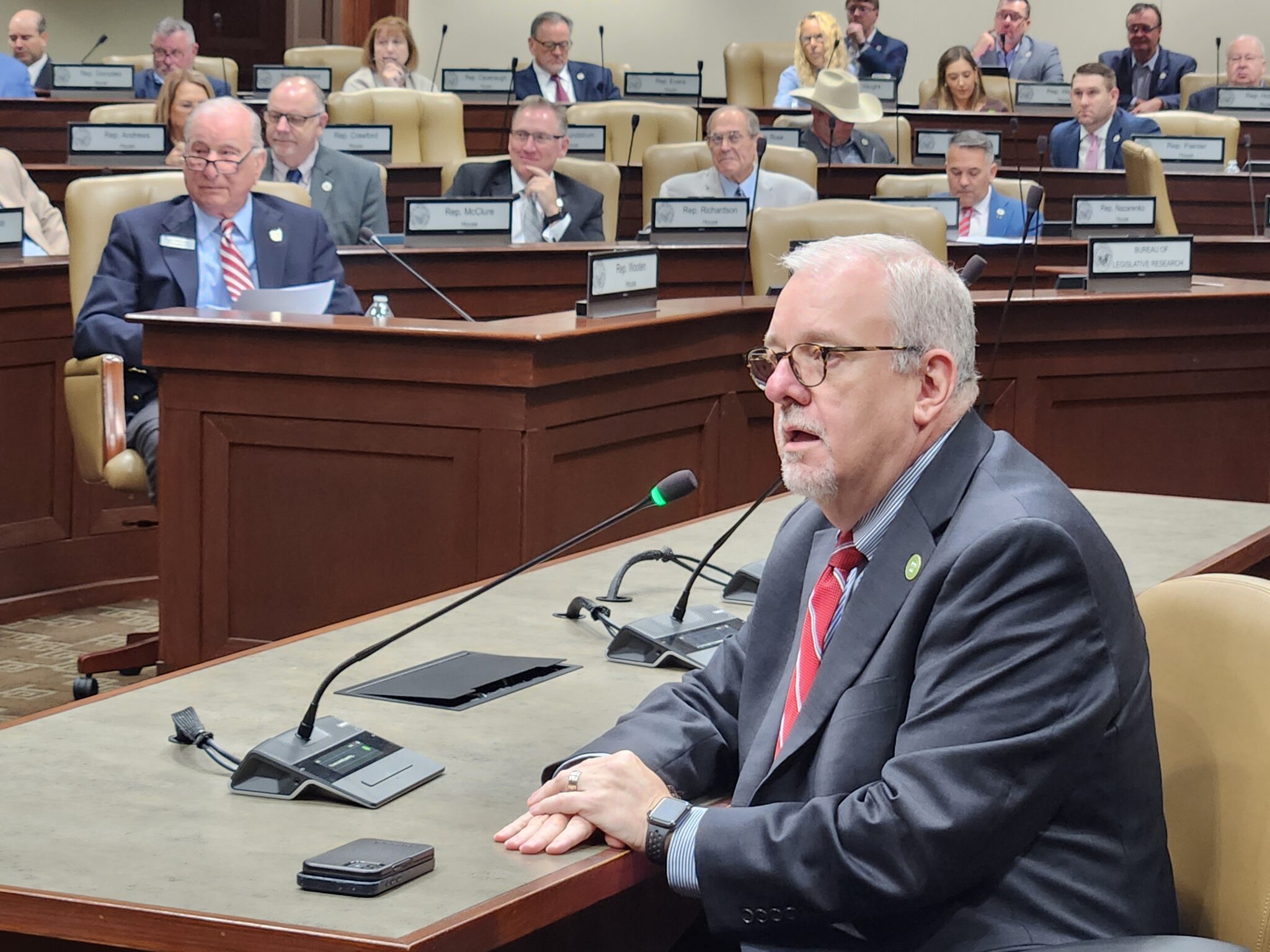
PHOTO: Finance and Administration Secretary Jim Hudson addresses the Arkansas Legislative Council on Friday, Oct. 16, 2025. | Tess Vrbin/Arkansas Advocate
By ANTOINETTE GRAJEDA | Arkansas Advocate
An Arkansas lawmaker raised concerns Tuesday about how to fund the state’s school voucher program in the future after advancing a request for more money that would raise its cost this year to nearly $310 million.
A Legislative Council subcommittee, on a closely divided voice vote, endorsed the request for an additional $32 million for the Educational Freedom Account program. The full council is expected to take up the funding request on Friday.
The Educational Freedom Account program, created through a 2023 education overhaul known as the LEARNS Act, provides state funding for allowable education expenses such as private school tuition. The voucher program was phased in over three years with increasing eligibility until it was open to all students for the first time last fall.
Republican Rep. Frances Cavenaugh of Walnut Ridge said she supports the program but told the Performance Evaluation and Expenditure Review subcommittee Tuesday she’s worried about the Legislature continuing to approve funding beyond what had already been budgeted.
After approving a budget that included more than $187 million for the EFA program in April, lawmakers approved an additional $90 million in June. The additional money approved Tuesday is needed to fully fund this year’s program, according to a letter from the Arkansas Department of Education.
More than 44,000 students have been approved for the program this year, each of whom can receive up to $6,864, according to the state’s education department.
Cavenaugh asked what programs are going to be cut from the state budget to make room for the vouchers, which has become an annual expense, or if lawmakers should plan to keep funding the initiative annually until the state runs out of money.
Republican Sen. Jonathan Dismang of Searcy, who co-chairs the subcommittee, said he didn’t want to set a precedent that lawmakers would “punt the rights to draft (Revenue Stabilization Act) to the executive branch.” The stabilization act is the legislation detailing the state’s budget priorities.
Dismang said it ultimately is up to the Legislature to decide what gets funded in the state’s budget.
“I understand we’re in charge of RSA, but we fund so much stuff out of RSA, and when we tell ourselves that we’ve got a balanced budget, we’re lying to ourselves and to our constituents,” Cavenaugh said.
Department of Finance and Administration Secretary Jim Hudson disagreed and argued the state’s budget is balanced, which is required by law.
Republican Gov. Sarah Huckabee Sanders will present lawmakers a proposed state budget “well ahead” of April’s fiscal session and it will include funding for the program because it’s a priority for her, Hudson said.
“We have one-time money for this fiscal year,” he said. “We’re not proposing to use one-time money next year. ”
When the Educational Freedom Accounts program was created, Cavenaugh said lawmakers were told it would be controlled by the budget, but she’s frustrated that hasn’t been the case.
“I just want to make sure that we don’t get the state into an area where we, and quite frankly we’re going to be there anyway, that we have to make some really tough choices, as you said, what are we going to prioritize to be able fund, and we’re fast approaching that,” Cavenaugh said.
Arizona became the first state to offer a universal school voucher program in 2022. Increased participation has increased the program’s cost to about $1 billion, which has contributed to Arizona’s budget woes. Opponents of Arkansas’ program worry a similar situation could befall the Natural State, especially as lawmakers continue approving tax cuts.
Lawmakers also raised concerns Tuesday about what guardrails are in place to ensure program participants are using state funds appropriately.
Discover more from
Subscribe to get the latest posts sent to your email.